
Awards &
Conference Support
If you are an early career scientist, would you like to be considered for an Anders Early Career Award? This prestigious award is given to up to five scientists (usually four) each year who are within 5 years of the award of their PhD (i.e. not before 2020 for the 2026 meeting, unless there are valid circumstances for a career break). It is generally expected that the PhD has been awarded but, under exceptional circumstances, applications by students at the late stages of their PhD will be considered. Applicants should have impressive track records for this stage of their career and a good story to tell. The awardees receive a speaking slot in the Anders Early Career Award Session, which has traditionally been a very high standard and popular session as well as a $500 prize.
In recognition of the very fine contributions to science made by young protein scientists, the Lorne Conference on Protein Structure and Function each year makes one to five special awards.
Traditionally, they have been referred to as the “Young Investigator Award” – but we have now renamed them “Anders Early Career Awards”.
Application Process
In addition to submitting an abstract, applicants must provide a one-page CV summary (as a PDF) of their track record and address additional eligibility and optional relative-to-opportunity consideration during the abstract submission process.
CV Requirements
- Current Position & Institution
- Education & Training (degrees, postdoc if applicable)
- Research Track Record – up to 5 key publications
- Funding – fellowships, grants, major awards received
- Community Contributions – mentoring, leadership, service and presentations
- Prizes & Awards – relevant academic/scientific recognitions
- ORCID ID
All components of the application need to be submitted by the due date which will be announced soon. It is unlikely this deadline will be extended, irrespective of changes to other conference deadlines.
The selection committee will endeavour to account for the diversity of protein science community in their award selection, including in terms of gender, ethnicity, race, culture, geography, opportunity and physical ability. We strongly encourage applications that reflect this diversity.
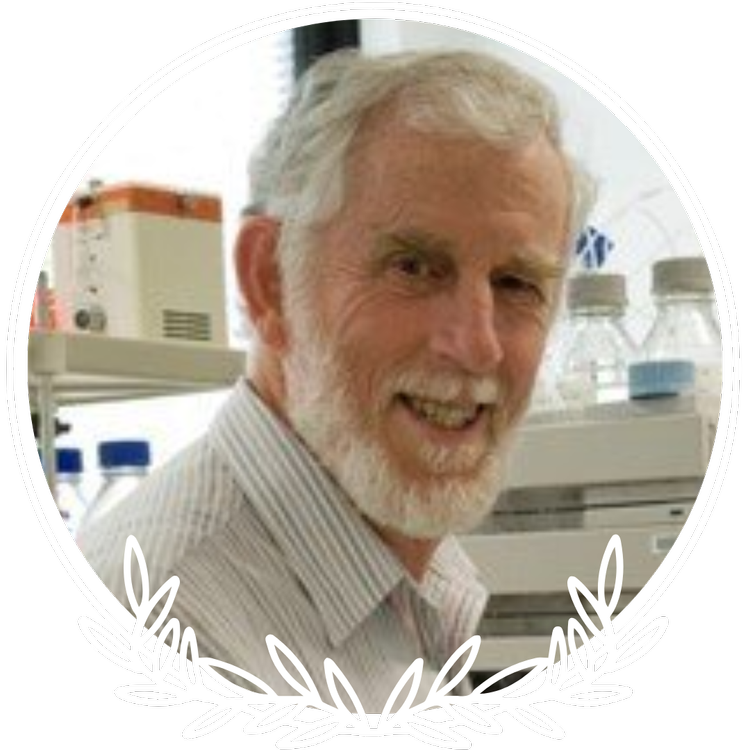
Professor Robin F Anders
The Anders Early Career Awards are named in honour of Professor Robin F Anders, who graduated from the University of Melbourne in 1961 and subsequently completed his PhD in the Russell Grimwade School of Biochemistry at the University of Melbourne.
From 1966 to 1974 Robin lectured in biochemistry at the Papua New Guinea Medical School in Port Moresby. While in PNG Robin developed research interests in tropical diseases, with a particular interest in the chemical nature of the amyloid that is sometimes associated with infectious diseases such as leprosy and tuberculosis.
After two years working on amyloid in Oslo, Norway, Robin returned to Melbourne and in 1978 joined the newly established immunoparasitology group at The Walter and Eliza Hall Institute of Medical Research. Robin and David Kemp led the group that in 1983 detected the expression of recombinant malaria antigens for the first time.
Robin worked closely with industry partners preparing antigens for malaria vaccine trials but has also published extensively on the structural characteristics of malaria antigens, many of which had novel structures containing extensive tandem repeat sequences.
Since 2000 Robin has been based at La Trobe University where he is now Professor Emeritus in the Department of Biochemistry and Genetics. Robin is also an Adjunct Professor at Monash Institute of Pharmaceutical Sciences where he continues his long-term collaboration with Professor Ray Norton, with a current focus on immune recognition of an intrinsically disordered parasite surface protein.
Robin has been an advisor to the World Health Organisation, the Medical Research Council in Britain and the National Institutes of Health in the USA.
When Syd Leach retired in 1985 Robin took over as Chairman of the organising committee of the Lorne Conference on Protein Structure and Function, a position he filled until he stepped down in 2000.
During this 15-year period the Lorne Conference grew to be one of the world's major conferences on protein science, with each conference featuring many leading international figures in the field.
Robin has attended every Lorne Conference except the first and has contributed oral and poster presentations on numerous occasions, commencing with a talk on amyloid at the 1977 conference.
In 2003 Robin was the conference's Leach Lecturer and recipient of the Leach Medal.
Background
The Lorne Conference on Protein Structure and Function is committed to the principles of equity, access and reconciliation, and we encourage the participation in our scientific program of Aboriginal and/or Torres Strait Islander researchers.
The Indigenous Researcher Award will support the full attendance costs (travel, registration, accommodation and subsistence) of one Aboriginal and/or Torres Strait Islander researcher, to the Lorne Conference on Protein Structure and Function each year.
Specifically, the award will cover costs including conference registration, accommodation in Lorne, reasonable travel expenses and reasonable daily subsistence costs. Expenses will either be covered directly, or provided to the applicant in advance.
Eligibility
Applicants may work on any aspect of protein structure and function, and should be enrolled or employed at any Australian University, Research Institute or government research entity, at any level.
This award has been established as a positive step to promote equality for Aboriginal and Torres Strait Islander people under the 'special measures' provisions in the Equal Opportunity Act 2010. Therefore, only Aboriginal and/or Torres Strait Islander people are eligible to apply. Gender equity will be a consideration in the selection of the recipient of the award.
Applications will be reviewed by a panel comprising the conference Diversity and Equity Committee.
Selection Criteria (Relative to Opportunity)
- Research Achievement as evidenced by an Abstract suitable for presentation at the conference.
- Current or future potential for scientific, professional, and/or cultural leadership.
- A confirmation of Aboriginality certificate.
How to Apply
Applicants should email r.cater@uq.edu.au having completed the form downloadable below (and including a brief CV).
The closing date for applications will be announced soon.
Applicants will be notified of the outcome within 2 weeks of the closing date.
About the Sparrow Award
The Sparrow Awards recognise outstanding group leaders from Australia or New Zealand. Eligible candidates must be more than five years post-PhD, lead an independent research laboratory, and be the senior author of a peer-reviewed original journal article.
Each year, the Lorne Proteins Organising Committee select the highest-ranked abstracts meeting these criteria, and the recipients are honoured with the Sparrow Award in recognition of their scientific excellence and leadership.
Background
The Lorne Conference on Protein Structure and Function provides at least $2000 each year to be distributed to presenters who need financial assistance to offset primary caring responsibilities.
Originally designated to support Women in Science, the scope was changed in 2021 to recognise the diversity of caring responsibilities amongst our participants.
While these funds are in principle available for any presenter, they are allocated with priority given to invited speakers first, then speakers selected from abstracts, and then posters selected from abstracts.
How to Apply
- A request for Carers in Science bursary funds can be made by emailing Rosemary Cater with a brief (100 word) case for support.
- For presenters who have submitted abstracts, you can apply for Carers in Science bursary funds during the submission process. Application closes when abstract submissions close.
We would love to be able to assist all presenters who need this support to attend, so if you are aware of funding sources we could work with to expand our scheme we would love to hear from you.
Background
The Organising Committee of the Lorne Conference on Protein Structure and Function recognises that interstate and international researchers have higher attendance costs than their Victorian counterparts.
In recognition of this inequity, we will be offering partial reimbursements to Early Career Researchers who are within 5 years of the award of their PhD (i.e. not before 2021 for the 2027 meeting, unless there are valid circumstances for a career break). Career interruptions will be considered when calculating eligibility. Students, who already receive reduced registration fees will be ineligible for this reimbursement.
Up to $5000 will be dispersed among all eligible attendees. The value of the reimbursement will be scaled based on distance travelled from the applicant's current home Institution.
How to Apply
In addition to submitting an abstract, applicants must confirm where they are domiciled, how many years they are post-PhD and, if more than 5 years post-PhD, outline any career interruptions. You can apply and provide the required information during the abstract submission process.
The application closing date will be announced soon.